


What This Update Is About
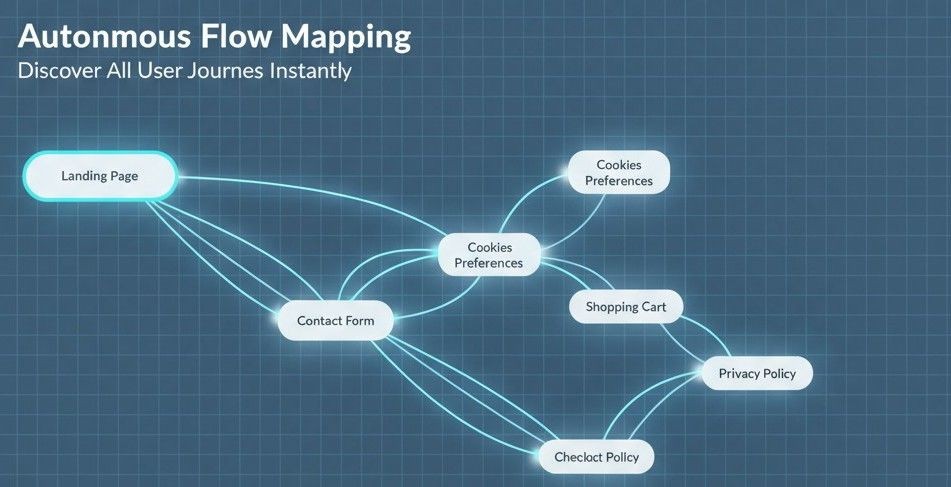
- We’re excited to introduce Autonomous Flow Mapping — a major leap in how Patronus discovers, maps, and analyzes every data journey across your digital ecosystem.
- This update brings self-directed discovery to your compliance stack, allowing agents to autonomously navigate user journeys, uncover hidden data paths, and build end-to-end flow maps — all without manual setup.
1. The Challenge
Until now, data flow analysis depended on predefined scripts or human mapping. DPOs and privacy teams had to:
- Manually configure every flow or interaction path.
- Audit pages one by one to track PII collection.
- Re-run mapping exercises after every product update.
This meant partial visibility, repetitive audits, and compliance lag that could take weeks to close.
2. What’s Changing
With Autonomous Flow Mapping, Patronus moves from manual pathing to self-learning discovery.
What’s new:
- Zero Instruction Navigation: Agents now autonomously identify all possible user journeys from a landing page.
- Parallel Flow Analysis: Multiple user flows are analyzed concurrently — not one at a time.
- Smart Context Awareness: Agents interpret forms, buttons, and pages by intent (signup, payment, feedback, etc.).
- No Browser Dependency: The mapping engine runs in an autonomous environment — faster, deeper, and independent of a user-facing browser.
In short, Patronus can now map every journey your user might take, even the ones you didn’t know existed.
3. Impact for DPOs & Privacy Teams
- Full Flow Visibility: See every path where PII is collected or transferred.
- 10× Faster Mapping: Automated concurrent flow detection dramatically reduces assessment time.
- Reduced Human Error: No reliance on pre-scripted test cases.
- Proactive Discovery: Stay ahead of compliance gaps as your digital footprint evolves.
This update enables DPOs to move from reactive audits to continuous visibility and dynamic assurance under the DPDP Act.
4. The Future of Autonomous Mapping
Autonomous Flow Mapping is the foundation for what’s next — predictive privacy automation.
Soon, agents won’t just map data flows — they’ll prioritize risks, simulate breach paths, and recommend remediations.