



- Third-party relationships quite frequently are the backbone of contemporary digital operations. However, now that the Digital Personal Data Protection (DPDP) Act is in the field, Data Protection Officers (DPOs) must remain eagle-eyed on the trail of documents—particularly where there is an external processor.
- This blog is your step-by-step guide to becoming a master in documentation practices for third-party processors according to the DPDP Act. From record types and formats of retention to audit-readiness and support for data subject requests, we've cracked everything into actionable recommendations for DPOs.
1. What the DPDP Act Demands: Documentation at the Heart
Accountability and demonstrable compliance are stressed particularly when data comes into the hands of external parties. And this starts with proper documentation.
Here's what DPOs need to document under the Act:
- Third-party processor details: Business name, commercial activity, DPDP status, purpose of processing.
- Processing agreements: Contracts emphasizing legal basis, obligations, breach procedures.
- Data categories processed: What personal data is passed on and for what purpose of processing.
- Consent trial or legal basis: Whether third-party processing is supported by user consent or legitimate use.
- Risk assessment results: DPIAs or third-party risk reports in connection with the partnership.
Pro Tip: Make use of a central compliance dashboard such as Patronus in order to connect each third-party with its documentation.
2. Managing Third-Party Records: Best Practices for DPOs
Recording isn't merely storage—quick access; audit-readiness, and live accuracy are also important.
Here's how to do it correctly:
- Data inventory: Store a living repository of all third-party processors and data flows.
- Version control: Record each change to contracts, policies, and DPIA reports.
- Third-party attestation logs: Periodically collect and record compliance declarations from partners.
- Access logs: Record which departments or personnel accessed shared data and why.
- Periodic reviews: Set reminders to review third-party agreements every 6 or 12 months.
Food for Thought: According to an IBM report, 83% of companies faced third-party data breaches due to outdated vendor assessments. Documentation is prevention.
3. Formats & Retention Strategies: Organizing for Longevity
Maintenance of documentation in proper format and for the correct duration is vital for compliance and resolution of disputes.
Best practices to achieve proper formatting and retention:
- Structured formats: Opt for spreadsheets, tables, and forms rather than unstructured text so that analysis becomes simple.
- Data type & risk level classification: High-risk processors must have comprehensive documentation
- Retention period
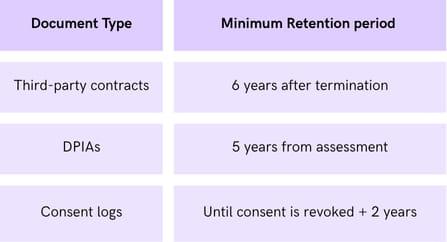
- Disposal policies: Apply secure deletion techniques when the retention duration elapses.
Quick Insight: The DPDP is not prescriptive on formats but is left to the Data Fiduciary's discretion—be wise and consistent.
4. Addressing Audits or SARs: Be Prepared, Not Panicked
When the Data Protection Board of India (DPBI) comes calling—or a data principal makes a Subject Access Request (SAR)—your documentation becomes your armor.
How DPOs can remain audit and SAR-ready:
- Have audit-ready folders: Segregate by processor, type of consent, purpose of processing.
- Flag high-risk processors: Keep DPIAs and breach reports ready.
- Pre-prepare SAR templates: Data subject information extraction, assembly, and sharing templates to enable speed.
- Log SAR responses: Date, scope, requester info, and when/how it was met.
- Keep a backup: Periodically back up compliance docs to avoid loss or corruption.
Expert Quote: "An unorganized DPO is the auditor's delight. Clarity and documentation win half the battle." – Neha Sinha, Privacy Consultant
5. DPO's Checklist: The Necessities for Third-Party Documentation
DPOs can use a go-to list to remain at the top of compliance responsibilities without getting buried in paperwork.
Your definitive checklist:
- All current third-party processors' list
- Signed processing agreements
- Logs of common data types and reasons for access
- DPIAs for all high-risk processing
- Records of regular vendor reviews
- Consent check or lawful basis per processor
- Audit/SAR response templates
- Retention & deletion schedule
Pro Tip: Automate as much of this checklist as possible using platforms like Patronus to cut manual effort and reduce errors.
6. Final Thoughts: Keep the Trail Clean, Clear & Compliance-Ready
Documentation may be unexciting, but to a DPO, it's the compliance industry's strongest arsenal. With the DPDP Act making third-party accountability mandatory, records are your legal fallback safety net, your operating guide map, and your trust signal to both the Board and Data Principals.
Key Takeaways:
- Don't document—document wisely.
- Spending on tools that provide centralization and audit logs.
- Practice documentation as an ongoing, dynamic process—not a one-off exercise.
- Be prepared for the day a principal or Board member comes knocking.
- By establishing a clean, complete, and up-to-date records trail, DPOs can guide their organizations toward safer, smarter, and fully compliant third-party relationships.